Transitions in Life are Spiritual Journeys
Original Publication Date: 2019-05-08
Revised 2026-11-27
Making Sense of Upheaval: Three Stages of Transition
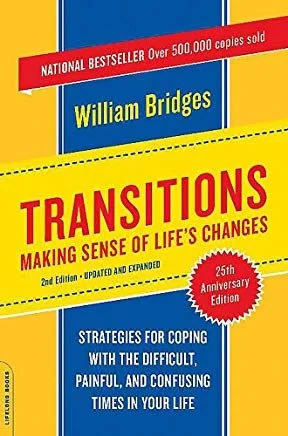
William Bridges’ Transitions: Making Sense of Life’s Changes. It explains the three stages of experiences people go through as they move from one life or career stage to another.
Everyone resonates with it because they see their exact experience in the examples and hopeful outcomes. Transitions: Making Sense of Life’s Changes.
His concept is, first, you have an ending. We all know what that is: your termination date - or the day you realized you were finished, if you got to make the decision. It might be a death date, move in date at you’re your youngest kid’s college dorm or the date of an accident.
Then there’s the Neutral Zone in which the work of the changing happens. There will be grieving, processing, learning and reorienting in this stage.[1]
And finally, there is a new beginning. Often a sense of serenity, of rightness, descends upon a person in this stage. They have an inner peace and glow that is very attractive, especially to new people in their lives.
Desert Time
I call the Neutral Zone Desert Time because it reminds me of the Israelites wandering in the desert for 40 years. It’s only looking back from the edge of the Promised Land that they see the map of where they’ve been and what they’ve gained along the way. (Don’t worry; it won’t take you 40 years.)
Moses recounts the journey from when they left Egypt, why they had to take the journey they did (so they would learn what they needed to be noble people with dignity and righteousness), what insights and changes came through their struggles. What felt like wandering now seems purpose-full.
A student of Hebrew told me that it wasn’t until two generations had died that the Israelites could enter the Promised Land. They couldn’t receive the promise until there was no one looking back, no one yearning for the security of slavery! People in transition sooner or later let go of the desire to turn back time too. They begin to look fully forward. They have no unfinished business distracting them (It feels like it’s been blocking them.) from receiving abundantly.
Phases of Transition and Recovery
Most often a transition begins with an abrupt ending – a layoff, a divorce, sudden health event, finding out a secret. Sometimes the ending is slower - a dawning recognition that your job or relationship or a hobby is no longer fulfilling or is even deadening.
In any event, once the ending is happening, the Desert Time launches. The first phase is grieving, in all its forms. It can be short or long. The shock of the ending can leave your eyes spinning in your head and take awhile to get over. A person can feel ungrounded, fragmented, disoriented, angry and have physical symptoms like heart racing, sleeplessness or even panic attacks. I feel sorry for people in this state because it’s frightening. Yet, I know they will come out of it. The phrase I often use to help them feel confident this will pass is that they are “putting straw back in their shirts.”[2]
Putting Straw Back in Your Shirt
An important aspect of transition is to remember who you have been – in your entirety, good and not so good, and in your agency. We reflect on where we made decisions or abdicated them. Often while working and parenting, we get caught up in schedules, deadlines, pressures, maintaining houses, and pleasing bosses and customers. We think our family and friends will understand that we can’t be all things to all people. We leave bits of ourselves behind. We forget:
· We are part of a community, with rights and responsibilities and pleasures in exercising them
· We like to draw, paint, dance and sing
· We are parents of growing children, like Harry Chapin’s Cat’s Cradle song (https://www.youtube.com/watch?v=etundhQa724)
· We like the conversations in the car ride home after watching the kids’ soccer games
· We have talents and abilities that are valued by lots of people; that our boss does not always have our best interest at heart, and that making money is not our goal – satisfying customers, living well, building a future we want to live in, raising wonderful humans and other personal ambitions are our goals. That’s why we’re talented; we have many goals.
· We can read a novel, cook gourmet dinners, and make friends
· We have interests that we have been neglecting while trying so hard to meet our responsibilities. We forget to nourish our inner selves, get rest, attend to daily needs like seeing beauty around us.
Sometimes the ending is the best thing that could have happened because now we can structure our lives to be more expansive.
Turning
In a transition time, we find out things we didn’t know: that we like a kind of work we didn’t know existed, or that there’s a path to do something we always wanted, or that it’s ok to ask for help or to say no. Sometimes we find out things we were never told.
One friend who came from a good Presbyterian family, found out that her father was Jewish. His family had sat Shiva for him for marrying outside their faith. There are two things about this: a) It takes a lot of denial for a whole family to neglect to mention that dad could not have sprung out of the head of Zeus; that he had to have a family of origin. And b) he had a sister and nieces who were delighted to be found! What a reunion they had! In a healing journey like this, in which the pain started in an earlier generation, we might feel relief for a number of people even if we weren’t aware of the pain in the family before.
But if our transition journey started with suffering – the death of a loved one, the loss of our health, rejection by a family member, a terrible accident – so much so that our very concept of our self is gone, our transition may be an even deeper healing journey, transitioning from the person we were to a different person with a new trajectory and perspective that transcends the suffering. We may have lost what gave our lives meaning and we have to struggle to keep going until new meaning dawns for us.[3]
Going through the Neutral Zone phases in a deep way will eventually reveal meaning beyond the suffering - realigning our identity with reality and finding people we belong to and with. On this kind of journey, we often come to see that we are living in a larger context than we knew before. It can feel like we literally see farther.
Mid-life seems to be a time for finding new straw for our shirts and job transitions seem to be one frequent time when we find it. Yet it could be some other transition - retirement, death of a parent or spouse, or, as I said, finding out a secret that changes everything we thought we knew. Still, I promise you:
Every transition has a gift in it.
Emerging from Transition Time
Sometimes during the grieving phase and more often after it, we begin our new tasks in earnest. We clean out our parents’ closets, or kids’ rooms, or write resumes. We pick up a new hobby, join a faith community or book club, start daily walking with the neighbor down the street.
As a transition progresses, there are fits and starts and people show up who act as guides to new ideas and connections. Groups where we belong and can be ourselves are important, so that as we integrate changes in our self-concept, the other members provide a sense of continuity.
Bewildering as a transition can be at the beginning, we start to make changes in our approaches to everything. Meeting new people becomes easier as we see more of our value. We hear our own voice telling our story.
It seems that these conversations are taking us somewhere else, to a more peaceful way of being. Satisfied that this is the case, a job seeker, new retiree, or recent widow settles and is now able to hear what others around them are saying and feeling. They realize this sharing in relationships has been missing from their experience. Sometimes for a very long time.
Returning
One of the gifts of transition, if we don’t have it already, is getting in touch with our inner guidance, our own strongly clear knowing. Without that, it’s hard to recognize opportunities for a deep-breathing way of being. Mid-life is a transition itself, and healing is available for very old and very recent injuries if we need it. The joy of engaging with the spiritual journey, training our eye for it, and making changes in our psyche are worth it. It is the Return, where we feel a deep sense of peace.
[1] These four phases are my categorizing the work of Bridges’ Neutral Zone.
[2] This phrase refers to the experience of the Scarecrow in The Wizard of Oz. He was broken down by bad actors, but his friends helped put him back together.
[3] This does not mean that the suffering was worth it. Most likely it wasn’t. But the new reality is here now. I have heard people try to encourage a person by saying, “What doesn’t kill you makes you stronger.” That only applies to mending broken bones in otherwise healthy young people who are still producing plenty of bone cells to make the mending. A broken bone by itself doesn’t change identity. More often what doesn’t kill a person leaves them weaker in some way, even if they have worked hard to heal and come to acceptance and transcendence. Please don’t say it to them. And please don’t say it to yourself; that’s ignoring the pain you are feeling and need to heal.